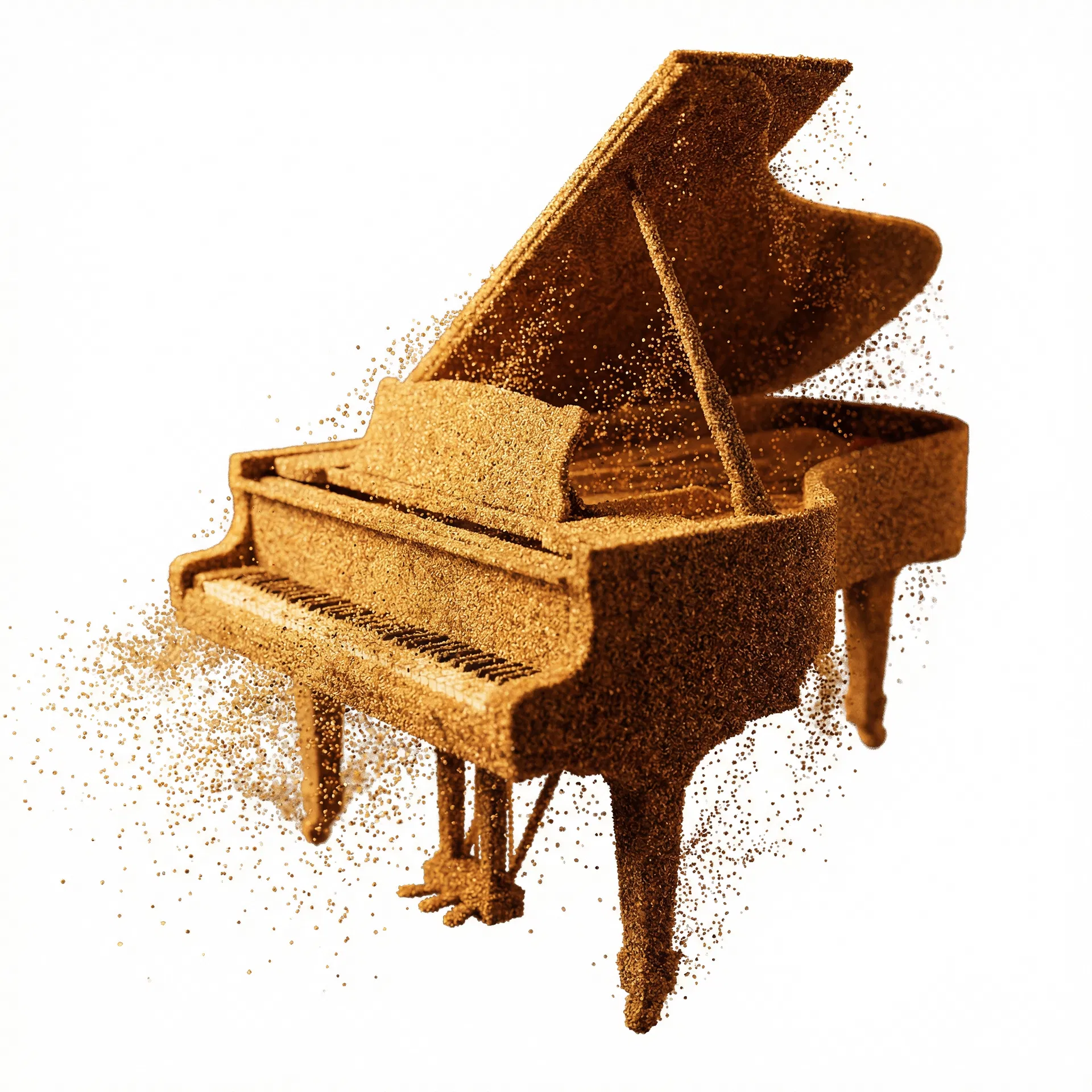



The piano is often called the king of instruments, and for good reason. Its range spans nearly the entire spectrum of musical pitches, it can play melody and harmony simultaneously, and it provides a visual representation of music theory that makes it an ideal instrument for learning. This guide covers the fundamentals that will set you on the path to piano mastery.
Getting Started
Before you play your first note, understanding proper posture and hand position will set you up for success and help prevent injury.
Posture and Seating
Sit at the center of the keyboard with your feet flat on the floor. Your forearms should be roughly parallel to the floor, with your elbows slightly higher than the keys. Sit forward on the bench so you can use your core for support and maintain good posture throughout your practice session.
Hand Position
Curve your fingers as if holding a ball, keeping your wrists level with your forearms. Your fingertips should contact the keys, not the pads of your fingers. Maintain relaxed shoulders and arms—tension is the enemy of good piano technique.
Reading Music
The piano is an excellent instrument for learning to read music because the layout of the keys directly corresponds to the staff notation.
The Grand Staff
Piano music uses the grand staff, which combines the treble clef (typically played by the right hand) and the bass clef (typically played by the left hand). Learning to read both clefs simultaneously is a fundamental skill that opens up the entire piano repertoire.
Developing Finger Independence
One of the unique challenges of piano playing is developing independence between your fingers and hands. Each finger must be able to play with control and precision, independent of the others.
Scales and Exercises
Practicing scales in all keys develops finger strength, independence, and familiarity with the keyboard geography. Exercises like Hanon provide systematic workouts for developing even, controlled finger movement.
Practice Strategies
How you practice is just as important as how much you practice. Effective practice involves focused attention, clear goals, and systematic problem-solving.
Slow Practice
The secret to playing fast is practicing slow. Slow practice allows you to develop accuracy and muscle memory without reinforcing mistakes. Only increase tempo when you can play a passage perfectly at the current speed.
Conclusion
Learning piano is a rewarding journey that offers a lifetime of musical exploration. By building a strong foundation in technique, reading, and practice habits, you set yourself up for continued growth and enjoyment. Remember that progress comes through consistent, focused practice—even fifteen minutes a day can lead to significant improvement over time.


